



Get rid of pimples: The best tips for the clear skin
Acne scars can persist long after a pimple has healed and affect the skin's appearance. dark or red spots, also as post-inflammatory hyperpigmentation They are known to be persistent, but with the right methods and products they can be overcome. They can be treated effectively.. This article explains what helps against acne scars, how they develop, and what measures you can take to avoid them in the long term.
What helps against acne scars?
There are many ways to get rid of acne scars. The most effective methods and products include: topical treatments, chemical peels and professional procedures. Here are the best approaches to effectively remove acne scars:
Topical treatments
- Niacinamide: It reduces redness, strengthens the skin barrier, and regulates sebum production. It lightens acne scars and promotes skin regeneration.

- Vitamin C: It inhibits melanin production and ensures a radiant complexion. It helps to even out skin tone and has an anti-inflammatory effect.
- Retinoids: Accelerate cell regeneration and minimize dark spots. Particularly effective for Acne marks and acne scars.
- Azelaic acid: Regulates pigment production and Reduces inflammation. Ideal for sensitive skin to gently remove acne scars.
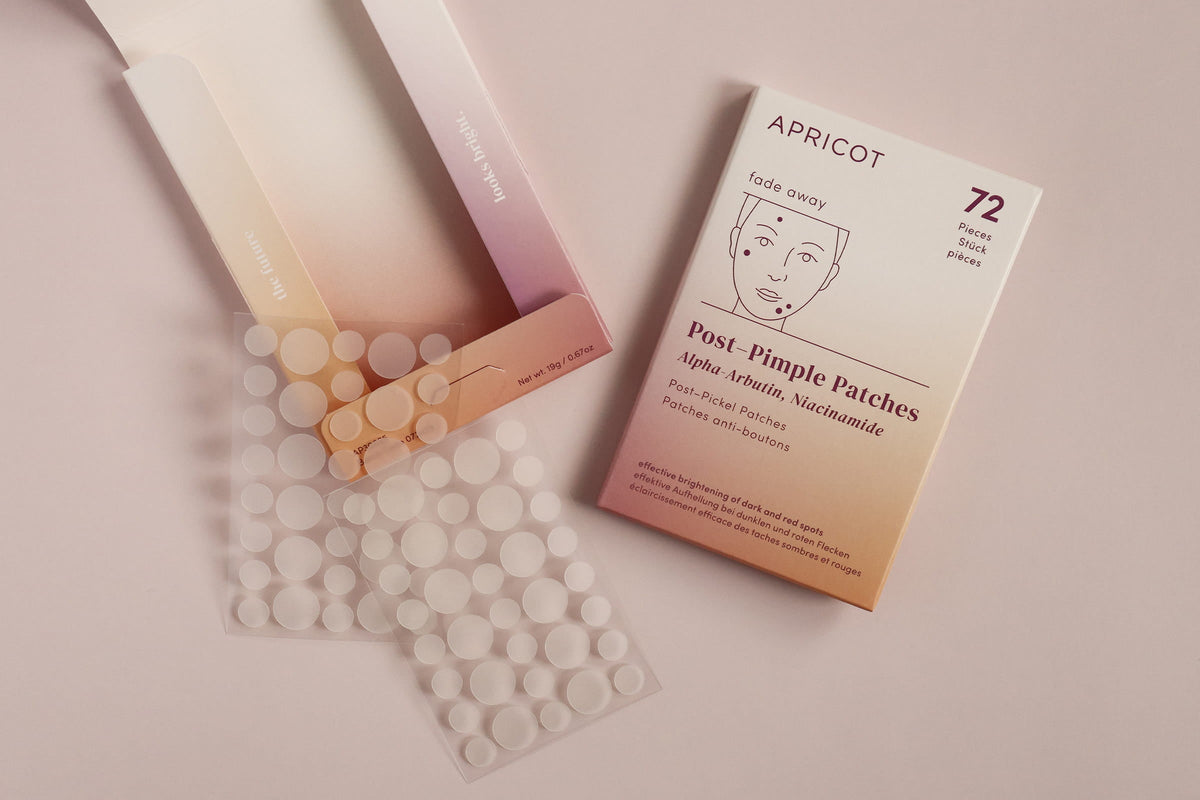
- Post-acne patches with alpha-arbutin and niacinamide: These special patches combine Alpha-Arbutin and Niacinamide, to specifically treat acne scars after a pimple has healed. These active ingredients effectively reduce hyperpigmentation and redness. First Results are often Visible after a few weeks. The patches are gentle, well tolerated and Suitable for all skin types, Also suitable for sensitive skin.

Chemical peels
Peels containing salicylic or glycolic acid remove dead skin cells, promote skin renewal and refine the complexion by gently removing acne scars.
Professional treatments
- Microdermabrasion: A mechanical peel that smooths the skin and reduces pigmentation irregularities.
- Laser therapy: Light pulses lighten pigment spots and improve the complexion, especially in the case of stubborn acne scars.
- Microneedling: Stimulates collagen production, regenerates the skin and reduces acne scars and acne marks.
What are acne scars and how do they develop?
Acne marks are the The result of an inflammatory reaction of the skin, which can occur after a pimple has healed. They manifest themselves in the form of dark or red spots on the skin, which stand out clearly from the surrounding skin tissue.These stains are no scars, but a form of Hyperpigmentation, which is triggered by the excessive production of melanin.

Causes of acne scars:
- Inflammation: The inflammation of a pimple leads to the skin Increased melanin production, to protect the affected area. This can lead to dark spots that remain even after the pimple has cleared up.
- Skin manipulation: The Pressing or scratching Applying something to pimples worsens the inflammatory response and increases the risk of acne scars. This can also lead to a worsening of acne scars.
- UV radiation: Sun exposure can worsen pigmentation and darken existing acne scars. Without sun protection, the affected areas heal more slowly and unevenly.
Prevention and treatment of acne scars
Hydrocolloid pimple patches
Hydrocolloid plasters These patches are a simple way to heal pimples quickly and cleanly. They absorb fluids, reduce inflammation, and prevent bacteria from entering the wound. This minimizes the risk of acne scars and promotes rapid healing without scarring. Important: Avoid applying active ingredients such as retinoids or peeling acids under the patch, as this can lead to skin irritation.

sun protection
Daily sun protection with at least SPF 30 It is essential to prevent acne scars and reduce hyperpigmentation, as UV rays delay healing.
Gentle exfoliationGentle peels with mild acids such as Mandelic acid or lactobionic acid They remove dead skin cells and promote skin renewal without causing irritation.
MoisturizerA strong skin barrier prevents irritation and acne scars. Moisturizers such as Hyaluronic acid and ceramides They intensively nourish the skin and strengthen its protective function.
Common mistakes that can worsen acne scars
- No sun protection: UV rays intensify pigment spots. Use at least SPF 30 daily.
- Products that are too aggressive: Avoid products containing alcohol or irritants.. Excessive exfoliation and strong acids damage the skin.
Getting rid of acne scars: Patience and consistency are key.
Getting rid of acne scars takes time and the right care. This requires a targeted combination of topical treatments, professional methods, and preventative measures. can you your Significantly improve skin appearance. Focus on gentle and well-tolerated products like post-acne patches to gently remove acne scars and achieve smooth, radiant skin.
Stay informed! Sign up for our newsletter and receive the latest tips, exclusive offers and more about beautiful skin.
Sources:
Boo YC. Arbutin as a Skin Depigmenting Agent with Antimelanogenic and Antioxidant Properties. Antioxidants (Basel). 2021 Jul 15;10(7):1129. doi: 10.3390/antiox10071129. PMID: 34356362; PMCID: PMC8301119.
Wohlrab J, Kreft D. Niacinamide - mechanisms of action and its topical use in dermatology. Skin Pharmacol Physiol. 2014;27(6):311-5. doi: 10.1159/000359974. Epub 2014 Jun 27. PMID: 24993939.

author
Katja
Lead Product Developer
With over 15 years of experience in the cosmetics industry, Katja develops skincare products that combine effectiveness with gentle care. Her focus is on skincare routines that can be easily integrated into everyday life and provide long-term skincare benefits. At APRICOT, she oversees product development from the initial concept to the finished product.



Leave a comment
This site is protected by hCaptcha and the hCaptcha Privacy Policy and Terms of Service apply.