


Article: What is Lyocell? Material, manufacturing and advantages

What is Lyocell? Material, manufacturing and advantages
Lyocell is a cellulose fiber made from wood, known for being particularly skin-friendly, smooth, and resource-efficient. The material is also known under the brand name Tencel™ and is increasingly used in fashion, bedding, and beauty products. In this article, we explain what lyocell consists of, how it is produced, and what its distinguishing properties are.
What is lyocell made of?
Lyocell consists of cellulose derived from wood. The following are most commonly used:
- Beech and spruce wood from certified European forestry
- Eucalyptus wood, often from plantations in South Africa
Both types of wood grow relatively quickly and generally require less irrigation and pesticides than conventional cotton.
How is lyocell manufactured?
Lyocell is produced in a closed production cycle. The most important steps are:
- Wood chips are soaked to loosen the cellulose.
- The pulp is mixed with an organic solvent and water.
- The mass is heated until a spinning solution forms.
- The spinning solution is forced through fine nozzles and spun into fibers.
- The solvent is largely recovered and reused.
According to Lenzing, the largest producer of lyocell, over 99 percent of the solvent used can be recycled. This distinguishes lyocell from many other fibers, where solvents and byproducts place a greater burden on the environment.
Is lyocell sustainable?
Lyocell is considered a more environmentally friendly alternative compared to many other textile fibers. Several factors support this:
- The wood usually comes from certified, sustainable forestry (e.g. FSC or PEFC seal)
- The closed production cycle reduces the use and loss of solvents.
- Lyocell is biodegradable.
However, a more nuanced assessment is necessary: How environmentally friendly lyocell actually is depends heavily on the wood's origin and the manufacturer's production methods. Certifications like GOTS or IVN Best, which are awarded exclusively to natural fibers, cannot be obtained for lyocell as a semi-synthetic fiber. Those who value verifiable information can look for manufacturer specifications and certifications such as the EU Ecolabel.
Is lyocell vegan?
Yes, lyocell is entirely plant-based. The fiber consists exclusively of wood pulp and contains no components of animal origin – unlike silk, which is obtained from silkworm cocoons.
What are the properties of lyocell?
Lyocell is characterized by several material properties:
- Smooth fiber surface: can reduce friction on the skin
- breathable: supports moisture exchange
- Moisture-regulating: absorbs moisture and releases it again
- Skin-friendly: It is considered pleasant for sensitive skin.
- Biodegradable: Pure lyocell without fiber blending is compostable.
Why is lyocell good for skin and hair care?
The smooth fiber surface of lyocell reduces friction between the fabric and skin or hair. This is particularly relevant at night when the face and hair are in contact with a pillow or head covering for hours.
- Less friction on the skin: It can help reduce sleep-related wrinkles caused by repeated pressure during sleep.
- Less friction on the hair: can help prevent hair breakage, frizz and tangling.
- Moisture-regulating: It supports a balanced climate directly on the skin without drying it out.
Lyocell does not replace skin or hair care products. The material works purely mechanically by reducing stress caused by friction, not through active ingredients.
Lyocell at APRICOT
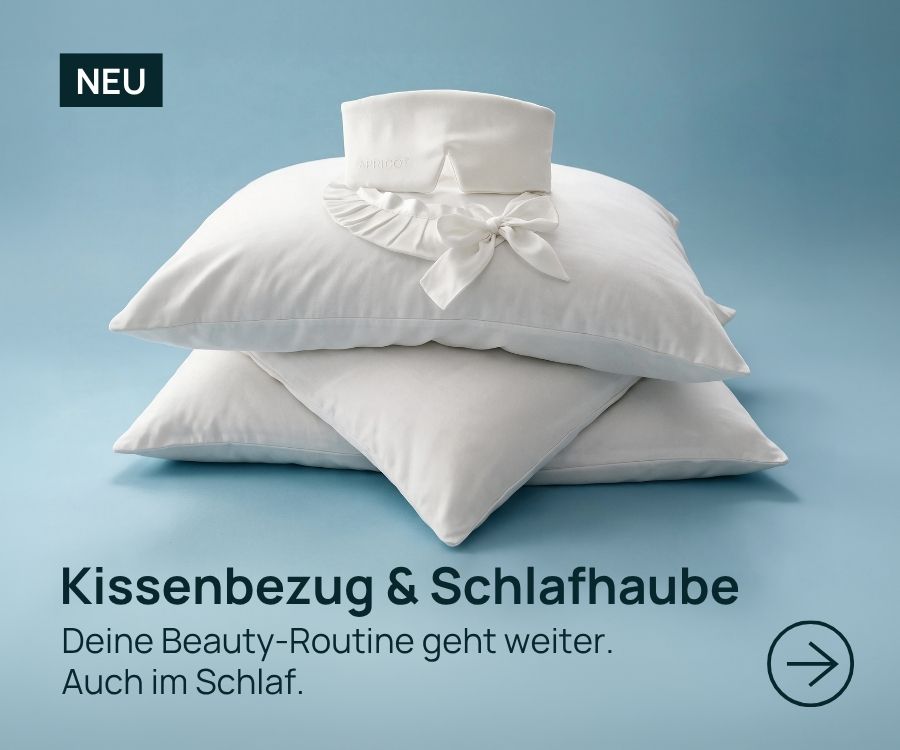
We use lyocell in our Beauty Sleep Collection: Our pillowcase and sleep cap are both made from this material and are designed to promote the most skin- and hair-friendly sleep environment possible. This choice of material is not accidental, but reflects our general commitment to a more environmentally conscious product selection – you can find out more on our page about... sustainability at APRICOT.
Frequently Asked Questions about Lyocell (FAQs)
Is Lyocell the same as Tencel?
Tencel™ is the brand name for lyocell fibers from the Austrian manufacturer Lenzing. Lyocell is the general material name, while Tencel™ refers to the fibers of a specific manufacturer.
Is lyocell better than cotton or polyester?
There's no single answer to that. Lyocell tends to require less water and pesticides to cultivate than conventional cotton and, unlike polyester, isn't made from petroleum. Which material is preferable in a given situation depends on the intended use and personal priorities.
How do you properly care for textiles made of lyocell?
Lyocell textiles should be washed gently at low temperatures to preserve the fiber structure. Air drying or drying at a low temperature further protects the material.
Conclusion
Lyocell is a cellulose fiber made from wood, produced in a largely closed-loop system. The material is entirely plant-based, biodegradable, and considered a more environmentally friendly choice compared to many other textile fibers – although actual sustainability varies depending on the manufacturer and production method.Its smooth, skin-friendly surface makes lyocell a material that is increasingly being used beyond traditional textiles.
Sources
TENCEL™ by Lenzing. What are TENCEL™ Lyocell and Modal fibers? Manufacturer information on fiber properties and environmental indicators (LCA according to ISO 14040/44, Higg MSI). https://www.tencel.com/de/fibers
Shot&Grain. Lyocell/Tencel: How sustainable is fashion made from trees? https://schrotundkorn.de/leben/lyocell

author
Katja
Lead Product Developer
With over 15 years of experience in the cosmetics industry, Katja develops skincare products that combine effectiveness with gentle care. Her focus is on skincare routines that can be easily integrated into everyday life and provide long-term skincare benefits. At APRICOT, she oversees product development from the initial concept to the finished product.


Leave a comment
This site is protected by hCaptcha and the hCaptcha Privacy Policy and Terms of Service apply.